
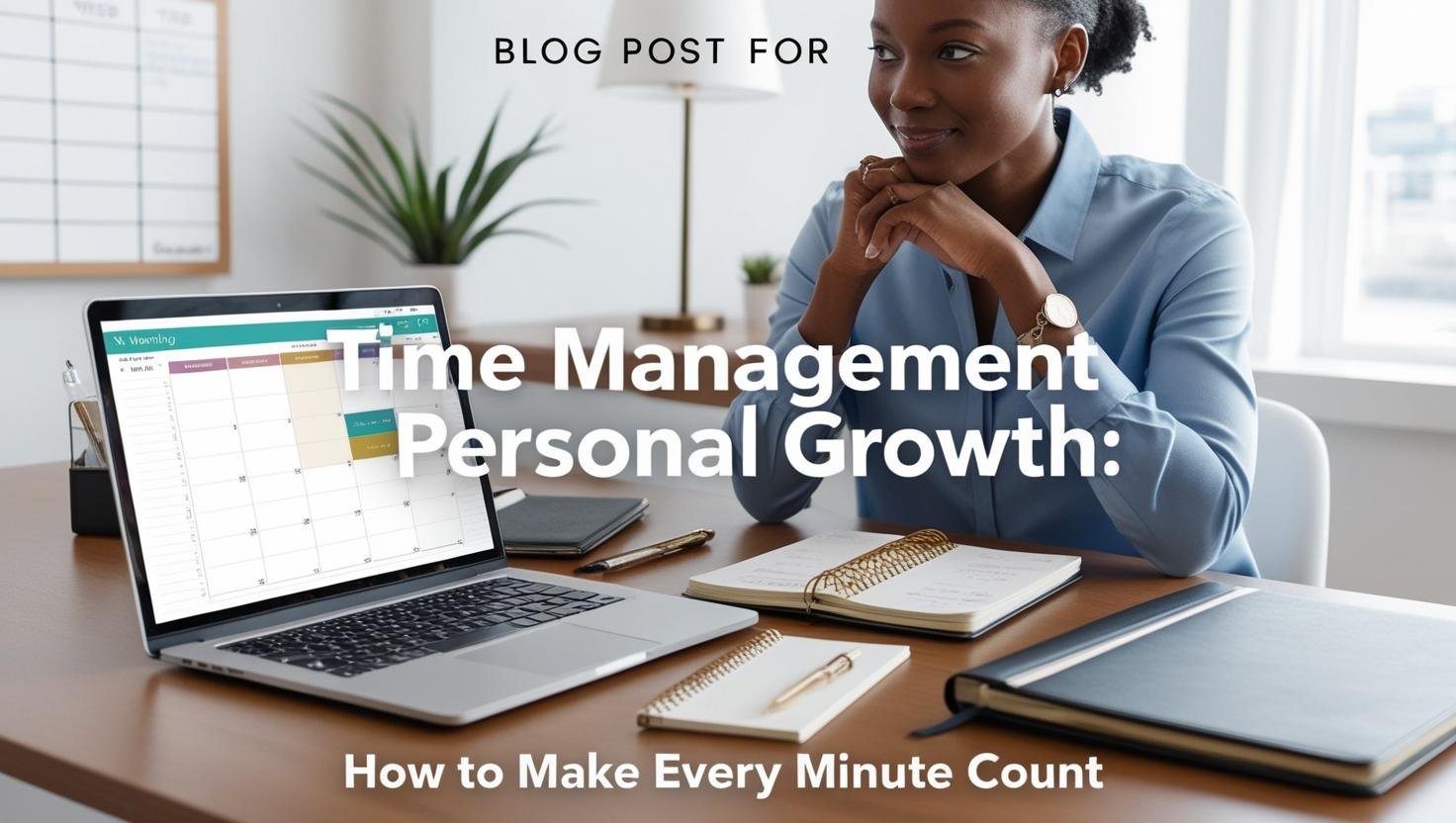
Time is the one resource we all share equally—every person has 24 hours in a day. Yet some people seem to do so much with theirs, while others constantly feel behind, overwhelmed, or stuck. If you’re working on personal development, learning how to manage your time effectively isn’t optional—it’s foundational.
In this article, we’ll break down practical strategies that help you take control of your time so that you can focus on what truly matters in your growth journey. It’s not about doing more. It’s about doing what matters more.
Why Time Management Matters for Personal Growth
Time management is about more than productivity—it’s about purpose. If you don’t control your time, someone else will. You’ll find yourself reacting to life rather than intentionally creating it.
Here’s how poor time management holds back your growth:
- You never start the course, book, or hobby you’ve been meaning to try.
- You feel too tired or busy to reflect, meditate, or plan.
- You experience burnout instead of progress.
Learning how to prioritize your time allows you to align your daily actions with your personal values, goals, and dreams.
Step 1: Start With a Clear Vision
Before you manage time, you need to know what you’re managing it for. Ask yourself:
- What areas of life do I want to grow in? (e.g. emotional health, career, skills, relationships)
- What long-term goals excite me?
- How do I want to feel at the end of each day or week?
Your vision will guide your decisions. Without it, even efficient time use can lead you in the wrong direction.
Step 2: Audit How You Currently Spend Your Time
Awareness is everything. For one to three days, track how you actually spend your time. You can use:
- A journal or notebook
- A time-tracking app like Toggl or Clockify
- A spreadsheet broken down by 30-minute intervals
Be honest. Include time spent on scrolling, overthinking, commuting, or multitasking. You may be surprised how much time is going to things that don’t support your growth.
Step 3: Define What Truly Matters
Once you see how you spend your time, decide what deserves to stay. Ask yourself:
- Which activities give me energy, meaning, or results?
- Which tasks drain me or feel like distractions?
- What habits move me closer to the person I want to become?
Create a list of “High-Value Activities” (HVAs) that matter most to your growth—like reading, exercise, learning a skill, journaling, or building your side project. These should be protected time blocks in your day.
Step 4: Use Time Blocking to Design Your Day
Time blocking means assigning specific hours to specific tasks—so instead of a vague to-do list, you schedule your growth.
Example:
| Time | Task |
|---|---|
| 6:30–7:00 AM | Morning stretch + journaling |
| 7:00–8:00 AM | Focus work (deep task) |
| 12:30–1:00 PM | Learning (read or course) |
| 5:30–6:00 PM | Walk / podcast |
| 8:00–8:30 PM | Personal reflection |
Don’t forget to block time for breaks, meals, and rest—over-scheduling leads to burnout, not growth.
Step 5: Apply the 80/20 Rule (Pareto Principle)
The 80/20 Rule says 80% of your results come from 20% of your efforts. Identify the 20% of tasks that drive the majority of your personal growth and double down on them.
For example:
- If reading books has changed your mindset more than podcasts, prioritize books.
- If journaling has given you clarity while endless YouTube videos haven’t, journal more.
Spend less time on what’s convenient and more time on what’s impactful.
Step 6: Learn to Say No Without Guilt
You can’t do everything—and that’s okay. Every time you say yes to something that doesn’t align with your vision, you say no to something that does.
Say no to:
- Meetings that could’ve been emails
- Social obligations that drain you
- Commitments that serve others but sabotage your growth
Remember: saying “no” is saying “yes” to your time, your goals, and your values.
Step 7: Eliminate or Limit Time Wasters
Time wasters aren’t always obvious. Some examples include:
- Mindless social media use
- Constant checking of emails
- Multitasking instead of deep work
- Watching “just one more” episode
Use strategies like:
- App timers and blockers (e.g., Forest, Freedom)
- Keeping your phone in another room
- Scheduling specific times to check messages
Protect your focus like it’s gold—because it is.
Step 8: Batch Tasks for Greater Efficiency
Task batching means grouping similar tasks and doing them in one focused session. This reduces mental switching costs and boosts efficiency.
Examples:
- Respond to all emails once per day, not every 10 minutes.
- Meal prep for the week in one session.
- Record multiple content pieces in one afternoon.
This gives you more free time for intentional personal growth activities.
Step 9: Use Downtime Intentionally
Not all time has to be “productive” to serve your growth. Use small pockets of time wisely:
- Listen to an audiobook while driving
- Meditate for 5 minutes during a break
- Reflect during a walk
Your day is filled with hidden opportunities for meaningful growth—if you learn to notice and use them.
Step 10: Review and Adjust Weekly
Growth is never linear. At the end of each week, take 10–15 minutes to reflect:
- What worked well in my time management?
- What did I spend too much or too little time on?
- What will I change next week?
This simple habit will help you build awareness and continuously improve your strategy.
The Real Goal: Quality Over Quantity
At the end of the day, it’s not about squeezing more hours out of your day. It’s about aligning your time with what truly matters to you.
Even one deeply focused hour on a meaningful goal is more valuable than 8 scattered hours of distraction. Growth doesn’t come from being busy—it comes from being intentional.
Take back control of your time. Build your days around your values. And watch how fast your personal development accelerates when every minute counts.